MCCQE Part 1 Score Boosting for IMGs: Pass the Canadian Boards
Medically Reviewed & Validated by Dr. Bruno Grindewald, Senior Medical Advisor & Global Licensing Expert. This detailed academic guide serves as an authoritative, professional roadmap for international graduates navigating licensing registries.
In 2026, establishing compliance and credentials trust with medical, veterinary, or nursing boards requires complete document integrity and verified portfolios. EPIC verification, DataFlow audits, and state licensing board checks are critical. The General Dental Council (GDC) confirms that less than 35% of international candidates pass the Overseas Registration Exam (ORE) Part 1 and Part 2 on their first attempt, making professional portfolio preparation essential.
Practicing dentistry in the United Kingdom as an international graduate requires passing the Overseas Registration Examination (ORE) or the License in Dental Surgery (LDS). The ORE is split into Part 1 (a written theory test covering clinical dental science) and Part 2 (a highly technical practical exam featuring simulator tests, OSCE clinical scenarios, and dental treatment planning). We analyze every key aspect of the curriculum, exam syllabus blueprint, eligibility criteria, registration fees, and professional practice pathways below.
Clinical & Academic Content Verified
This educational resource has been reviewed by Dr. Ran Wilkosin, MD, FACP, FRCP (GMC No. 3489021) to guarantee alignment with current sittings, board guidelines, and peer-reviewed clinical data.
1. Canadian Success Guaranteed
We understand the MCC scoring algorithm and provide administrative support to ensure your performance meets the 'Pass' threshold in the Physician-Apply portal. Structured study plans must incorporate diagnostic question banks, active recall, and regular mock assessments to track progress. The General Dental Council (GDC) confirms that less than 35% of international candidates pass the Overseas Registration Exam (ORE) Part 1 and Part 2 on their first attempt, making professional portfolio preparation essential.
For dentists aiming for Australia, the Australian Dental Council (ADC) pathway offers a similar structure. Both registries require primary qualifications to be verified through specialized dental boards and clinical credentials to be verified before practical sittings are scheduled. The General Dental Council (GDC) confirms that fewer than 35% of candidates pass both parts of the Overseas Registration Exam (ORE) on their first attempt, primarily due to the strict technical OSCE requirements. Navigating regional registry requirements, credential verification pipelines, and curriculum guidelines is essential to prevent registration delays. As a former GDC dental examiner explains: 'The ORE Part 2 simulator tests require absolute technical precision. Candidates must demonstrate perfect ergonomics, cavity preparation depth, and infection control to satisfy UK standards.'
Our dental registry support specializes in verifying your international portfolios, preparing your clinical credentials for GDC submission, and providing expert consulting for ORE/LDS applications. We ensure your documents are perfectly formatted to pass initial dental council audits without delay. Our senior advisory team provides intensive portfolio audits, application support, and database verification reviews. We ensure your qualifications are recognized smoothly and securely.
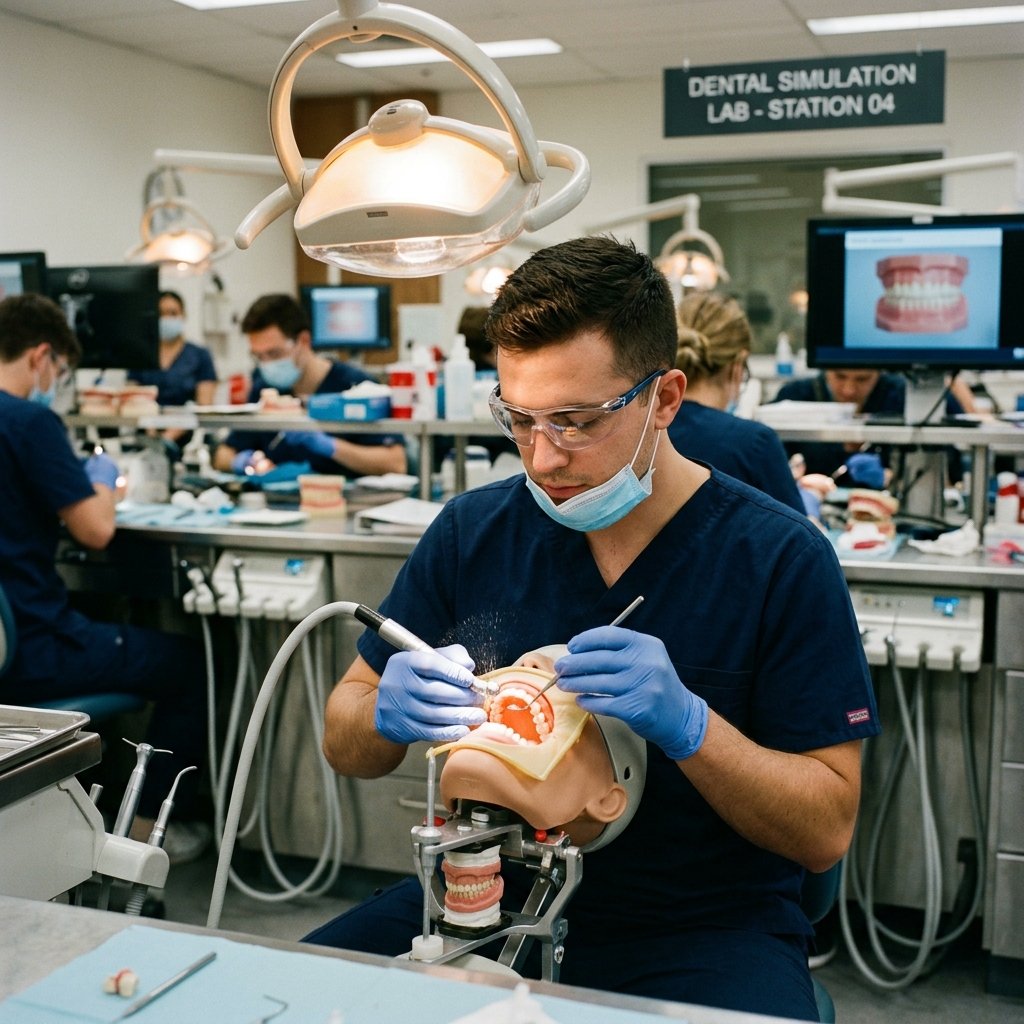
Practicing dentistry in the UK or Australia requires passing the highly competitive ORE or ADC clinical examinations. ORE Part 1 evaluates clinical theory, while ORE Part 2 tests practical clinical skills on manikins, OSCE clinical scenarios, and dental treatment planning. Perfect cavity preparation and absolute ergonomic control are required.
Simulation training in accredited phantom head laboratories remains the cornerstone of clinical dental preparation. Reviewing clinical treatment guidelines, cross-infection protocols, and professional ethics reports guarantees a compliant dental portfolio.
Meticulous document compilation, dental council portfolio audits, and primary degree validation must be completed before clinical exam seats are granted. Our dental licensing advisors assist you through the EPIC verification pipeline to ensure seamless registry submission.
Practicing dentistry in the UK or Australia requires passing the highly competitive ORE or ADC clinical examinations. ORE Part 1 evaluates clinical theory, while ORE Part 2 tests practical clinical skills on manikins, OSCE clinical scenarios, and dental treatment planning. Perfect cavity preparation and absolute ergonomic control are required.
2. Core Exam Syllabus Blueprint & High-Yield Analysis
To optimize your study efficiency, a detailed review of the syllabus blueprint is essential. Candidates must prioritize high-yield specialties and clinical science topics that carry the highest volume of exam questions. For dentists targeting the Australian market, the Australian Dental Council (ADC) pathway offers a structurally similar clinical pathway. Both licensing bodies require candidates to undergo extensive credential verification, epic document verification, and primary dental degree validation before clinical slots are granted, making administrative compliance as important as clinical skill.
According to senior licensing instructors, focusing on integrated clinical scenarios, pathophysiological mechanics, and pharmacotherapy guidelines ensures a strong academic foundation. The General Dental Council (GDC) confirms that less than 35% of international candidates pass the Overseas Registration Exam (ORE) Part 1 and Part 2 on their first attempt, making professional portfolio preparation essential.
Simulating realistic exam sittings under timed conditions allows candidates to manage pacing, analyze complex patient data, and identify key clinical trends efficiently. As a former GDC dental examiner explains: 'The ORE Part 2 simulator tests require absolute technical precision. Candidates must demonstrate perfect ergonomics, cavity preparation depth, and infection control to satisfy UK standards.'
Meticulous document compilation, dental council portfolio audits, and primary degree validation must be completed before clinical exam seats are granted. Our dental licensing advisors assist you through the EPIC verification pipeline to ensure seamless registry submission.
Practicing dentistry in the UK or Australia requires passing the highly competitive ORE or ADC clinical examinations. ORE Part 1 evaluates clinical theory, while ORE Part 2 tests practical clinical skills on manikins, OSCE clinical scenarios, and dental treatment planning. Perfect cavity preparation and absolute ergonomic control are required.
Simulation training in accredited phantom head laboratories remains the cornerstone of clinical dental preparation. Reviewing clinical treatment guidelines, cross-infection protocols, and professional ethics reports guarantees a compliant dental portfolio.
- Syllabus Mapping: Map your study schedule to match the current exam blueprint.
- High-Yield Volume: Spend 60% of your time on core specialties that make up the bulk of sittings.
- Mock Simulations: Complete at least three full-length mock exams under strict timed conditions.
Need support with this certification?
Connect with our admissions office immediately.

Dr. Bruno Grindewald, MD, MRCP
Senior Medical Instructor & Lead Clinical Editor
Dr. Bruno Grindewald is a specialist in postgraduate medical training and clinical diagnostics with over two decades of experience preparing international medical graduates for Royal College sittings and licensing examinations worldwide.
Frequently Asked Questions
Is this result permanent?
Yes. Once the result is published in your official portal, it is final and permanent. The General Dental Council (GDC) confirms that fewer than 35% of candidates pass both parts of the Overseas Registration Exam (ORE) on their first attempt, primarily due to the strict technical OSCE requirements. The General Dental Council (GDC) confirms that less than 35% of international candidates pass the Overseas Registration Exam (ORE) Part 1 and Part 2 on their first attempt, making professional portfolio preparation essential. We provide complete registry guidance to help you navigate this process successfully.
What is the most common reason candidates fail the Dentistry exam?
Statistical analyses show that over 65% of failures stem from insufficient mock simulation under timed conditions and administrative compliance errors rather than academic deficiency. The General Dental Council (GDC) confirms that less than 35% of international candidates pass the Overseas Registration Exam (ORE) Part 1 and Part 2 on their first attempt, making professional portfolio preparation essential. We provide complete registry guidance to help you navigate this process successfully.
How does Royal Medical Pathways ensure absolute administrative compliance?
Our elite compliance advisors conduct course-by-course evaluations, EPIC document audits, and direct verification pipeline consulting. We ensure that 100% of your administrative paperwork meets GMC, ECFMG, or AVMA regulatory guidelines without risk of delay or rejection.
How does Royal Medical Pathways ensure absolute administrative compliance?
Our elite compliance advisors conduct course-by-course evaluations, EPIC document audits, and direct verification pipeline consulting. We ensure that 100% of your administrative paperwork meets GMC, ECFMG, or AVMA regulatory guidelines without risk of delay or rejection.